SÃO PAULO
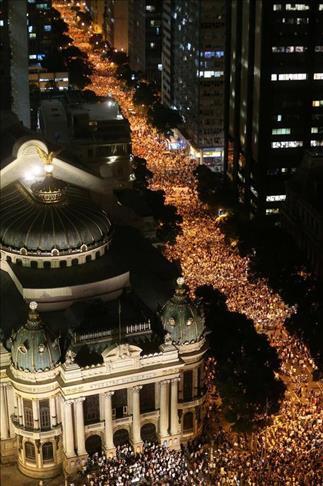
The 21st annual “March for Jesus” has drawn crowds of two million people out onto the streets in Brazil’s biggest city, São Paulo, according to estimates by the event’s organizers.
A number of streets in the city’s North Zone were closed to traffic as those taking part marched from Praça da Luz square in the city centre to another square further north, crossing the Tietê River. The event included speeches and prayers from pastors and political figures, and entertainment from a variety of Brazilian artists and gospel bands.
Christians from all over the country and allied to various denominations joined in the country’s biggest religious march, organized principally by the Renascer em Cristo - Reborn in Christ - Church and other modern Pentecostal churches, and supported by other traditional churches.
"After so many years, the event continues to have an impact," pastor Estevam Hernandes, founder of the Renascer em Cristo church, was quoted by Brazilian press as saying, adding that the success of the event was due to years of “work and prayer”.
Despite not confirming his presence ahead of the event, federal deputy Marco Feliciano, the controversial head of the Chamber of Deputies’ Human Right Commission and Minorities, did attend the event. He is currently facing daily calls from protesters to resign over comments made about members of the LGBT and African communities. He denies being homophobic or racist.
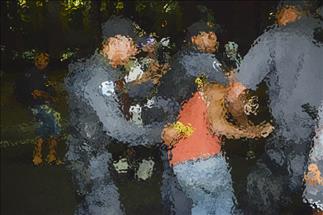
AA correspondent at the event witnessed the controversial pastor being rushed through crowds by a large number of security guards before heading for the main stage area. Feliciano is currently embroiled in a controversial “gay cure” motion currently being debated by the government and has been the target of many protests across Brazil. However, he enjoys widespread support among Evangelical communities, whose banners at the march accused the LGBT community of misrepresenting facts to take advantage of the deputy. However, as well as the “gay cure” accusations levelled at the evangelic pastor, protesters have also not ignored the fact that Feliciano is under investigation for allegedly embezzling funds from his Evangelical church.
March organizer Estevam Hernandes has also been investigated in the past on allegations of corruption, but was later cleared of the accusations.
- Part of the protest movement?-
This year’s march was held under the heading “New Time”, a fitting theme given a wave of protests that has swept the country throughout June, originally sparked by a rise in bus fares but since widened in scope to voice opposition to a range of topical issues, from political corruption to the substandard state of public services, particularly health, education and transport.
São Paulo architect Angela Castro, 37, who brought her family to the march, said she had had the chance to take part in the protests, but had decided to come to the March as it was “guaranteed” to be a peaceful protest.
“We’re not just fighting against racial discrimination, violence and drugs. I'm certain only Jesus can improve our country. Jesus is the biggest change you can have,” she told Anadolu Agency. Mrs. Castro said she believed such religious movements were the true answer to improving the country’s substandard public services and rampant political corruption.
Indeed thousands of those on the march, many of whom had travelled hours to come to the event from other regions of Brazil, held aloft slogans alluding to the mass protests that have swept the country, most with an evangelising twist. “Jesus is the tops. Health and education are the pits,” one banner read. “Against corruption! Jesus is the solution!” read another.
Others drew attention to anti-drug and anti-abortion campaigns, refuting other protests’ calls for the legalization of marijuana and the decriminalization of regular abortions in Brazil. Some slogans also denounced the spate of violence and vandalism seen in a number of the general protests.
Crowds at Saturday’s March for Jesus were larger than had been anticipated, partly due to “protest fatigue” that has seen the number of protesters dwindle in the past few days.
A demonstration held on Avenida Paulista, in central São Paulo, demanding prison for corrupt politicians saw just a handful of protesters.
- Last stand for mass protests?-
However, with the final of the Confederations Cup due to take place on Sunday evening at the Maracanã stadium in Rio de Janeiro, a number of “mega protests” have, as expected, been announced to coincide with the much-anticipated match, between Brazil and Spain.
The demonstrations are expected to run throughout the day until the match begins at 7pm.
The Rio Popular Cup and Olympics Committee has convened a demonstration starting at 10am, and have said they will march peacefully in the direction of the stadium but will not breach police lines or attempt to disrupt the game.
The organization will demonstrate against the forced removal of residents, the spiralling cost of hosting the World Cup and the Olympics, and the privatization of the Maracanã stadium – which has now cost over R$1.2 billion (over US$530 million), much of which has been financed by the state government and the national economic and social development bank (BNDES).
Fearing that the protests could become violent, an almost habitual occurrence in the past few weeks with police regularly using rubber bullets and tear gas against disruptive protesters, FIFA has boosted security at the stadium, and the police is reported to have increased its security detail at the venue by 42% to 6,000 men.
Analysts say Sunday’s protests could be a “last stand” for the main bulk of the country’s mass protests, as the platform generated by the Confederations Cup will no longer be available.
- Rousseff's approval-
Despite attempts by President Dilma Rousseff to placate protesters, including offers of a plebiscite on political reforms and a “five-pact” plan to sort out deficient public services, her approval rate was revealed to have slumped to a record low today. Pollster Datafolha said those who answered “excellent” or “good” in relation to the president had dropped to just 30 percent from 53 percent three weeks ago, when the last survey was carried out.
The new survey also revealed that, for the first time, the president would need to fight a second round of voting if next year’s presidential elections were held today, although she would remain in the lead. Political allies have voiced concerns that the protests, if mismanaged, could affect the upcoming elections.
englishnews@aa.com.tr