ISLAMABAD
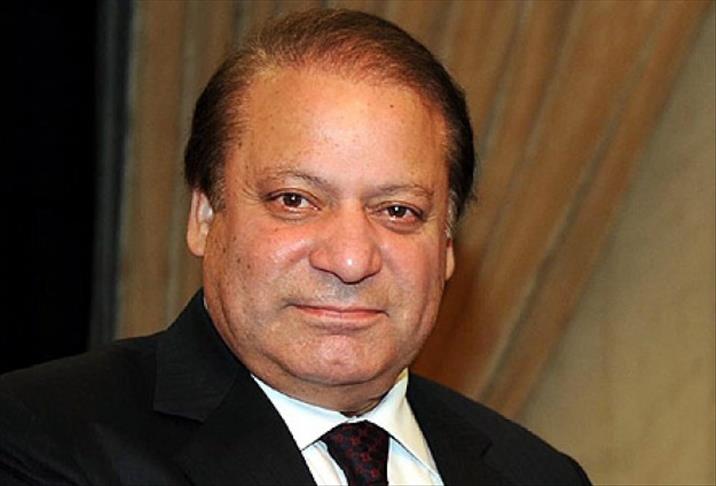
Pakistan Muslim League-N led by Nawaz Sharif, a former prime minister overthrown in the latest coup in 1999, is expected to win Saturday's elections in Pakistan, ranking first, for the federal seats at the National Assembly, and state assembly.
However, Sharif has no chance of coming to power alone and there are attacks and threats of terror ahead of elections.
Election government took the seat in last March from the coalition of Pakistan Peoples Party (PPP), Muttahida Qaumi Movement Party (MQM), and Awami National Party, as the only government in Pakistan history to retire by completing the normal tenure.
In Pakistan, with its 86 million voters, a total of 45 thousand candidates from 114 parties and independents will compete on Saturday.
Despite the threats of terrorist groups, high level of participation in the election is expected.
The May 11 elections, regarded as one of the most significant elections in Pakistani history after 1970s, are also important for Pakistani army that remained for over 30 years in power alone. The Chief of General Staff General Asfaq Kayani announced that 70 thousand soldiers would be deployed to secure the elections.
Elections shadowed by attacks
Despite the security efforts and measures of Pakistani army and the provisional government, the major obstacle the election faces is the terrorist threats and restraints. Parties organize election campaigns under terrorist threats and attacks.
With particularly nationalist and secular parties and candidates at the target, the attacks have claimed within the last two weeks over 120 lives out of which five were deputies.
Taliban of Pakistan issued a declaration, saying "There is no room for democracy in Islam," and threatened the people not to vote in the election. The organization also openly threatened particularly the nationalist and secular Pakistan Peoples Party (PPP), Muttahida Qaumi Movement Party (MQM) supported by Hindu immigrants, and the Awami National Party supported by Pashtun people. The organization said it would block the propaganda and demonstrations of these parties.
Two far right parties compete in the election
The competition of the election is between the center right Pakistan Muslim League-N and Pakistan Movement for Justice (PTI).
Pakistan Muslim League-N led by the former prime minister Nawaz Sharif is expected to win the elections ranking as the first party. Sharif has the advantage of his hometown Panjabi state with its voters of about 50 million.
As a very strong candidate in Panjabi, Sharif and his party PML-N are leading in the elections with the support of major tribes and religious groups.
Former captain of the Pakistani cricket team Imran Khan, known for his nationalist and anti-American discourse, heads PTI, the second strongest center right party in the elections. Khan is expected to get most of Pakistani young population votes, comprising 60 pct of Pakistani population.
Local and international public opinion polls indicate no party will come to power alone in May 11 elections. Results of the polls foresee the votes of Nawaz Sharif's PML-N as 20-25 pct, Imran Khan's PTI as 15-20 pct and the PPP led by Bilawal Bhutto, 25 year-old son of the former Prime Minister Benazir Bhutto as 10-15 pct.
Musharraf dissappointed upon returning home
The most remarkable development during the election period was the trial of former Pakistani Chief of General Staff and President Pervez Musharraf, arrested over the murder of former Prime Minister Benazir Bhutto.
The leader of the All Pakistan Muslim League (APML) Musharraf, overthrowing and exiling then prime minister Nawaz Sharif by the military coup in 1999, had to leave the country after his party's defeat in 2008 elections.
Returning home in last March to run as a candidate in the elections, Musharraf wasn't as politically-welcome as he expected but had to deal with several lawsuits against him, with charges ranging from terrorism, murder and treason.
Already under house arrest, Musharraf has recently been barred from politics for a lifetime by a local court in alleged plot to "adjourn the parliament and suspend the constitution by a military coup" and had to withdraw his party from elections.
Reporting by Erkan Yigitsozlu