ANKARA
Sectarian polarization in Yemen is a common concern for Ankara and Islamabad, Turkish prime minister said Friday.
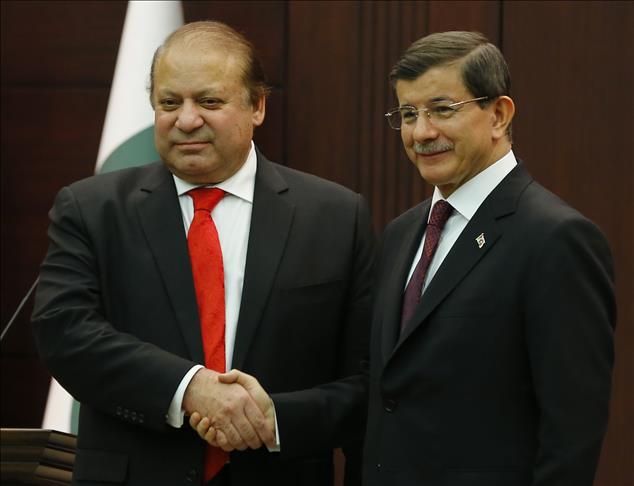
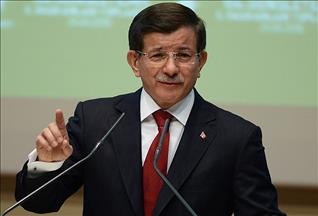
Addressing a joint press conference at the Cankaya Prime Ministry Office in Ankara, Prime Minister Ahmet Davutoglu and his Pakistani counterpart Nawaz Sharif expressed their joint resolve to support the steps towards establishing order in crisis-ridden Yemen.
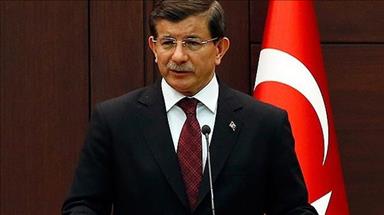
Davutoglu reiterated Ankara's stance against all sectarian and ethnicity-based disintegration of countries. "We all observe that such break-ups ruin the structure of countries in the region, disturb the public order and pave the way for wide-scale tensions and terrorist threats in the region," he said.
The Turkish premier’s remarks came after the Saudi Arabia-led military offensive against Shia Houthi militia in Yemen entered its second week.
Davutoglu said that both Turkey and Pakistan wanted to protect peace and stability in the region; prevent any further escalation of sectarian conflict and enable people in the region to live in harmony.
The Turkish premier said that they supported recent steps taken in Yemen, adding that this support was significant and meaningful only if it was accompanied by measures to prevent any further sectarian conflict.
"Turkey has expressed clearly its views on the Yemen issue. We believe that the democratically-elected Yemeni President Abd Rabbuh Mansour Hadi still has legitimacy," he said.
Davutoglu called for a focus on holding reconciliation talks in Yemen. "The future of Yemen must be determined only by the Yemeni people through a peaceful process where all sides of the conflict attend," he added.
He added that Turkey was in contact with both Saudi Arabia and Iran regarding the ongoing offensive against the Shia militia Houthi in Yemen.
About Thursday's historic framework accord between Iran and the world powers’ group, P5+1, the premier termed the move a positive development and an important phase in nuclear negotiations. "Everyone must act responsibly to bring this process to a further point," he added.
Meanwhile, the Pakistani prime minister said that both sides resolved to work together to bring about a peaceful resolution to the conflict in Yemen.
"The current situation in Yemen has been deteriorating. We are concerned that the legitimate government in Yemen was toppled by use of force by non-state actors. The situation now threatens the unity of the Muslim Ummah (global community of Muslims) and has implications for the whole region," Sharif said.
Describing Saudi Arabia as a close friend for both countries, the Pakistani premier said they agreed to stand by Riyadh and extend all possible support for the defense of Saudi Arabia’s sovereignty and territorial integrity.
In a joint statement, five Gulf countries -- Saudi Arabia, the United Arab Emirates, Bahrain, Qatar and Kuwait -- said the operation "was in response to a request from Yemeni President Abd Rabbuh Mansour Hadi to protect Yemen from the aggression of Houthi militias."
Yemen has been rocked by turmoil since last September, when Houthis overran the Yemeni capital of Sana'a, from where they have sought to extend their influence to other parts of the country. President Hadi was forced to flee the country in mid last week as rebels attacked.