SAO PAULO
A Brazilian congressman has been jailed after the country’s top court said a 13-year prison sentence handed down in 2010 for corruption had to be served behind bars.
Natan Donadon, a deputy for Rondônia state, is the first serving congressman to be sent to prison in Brazil since the end of military rule in the country.
Earlier this week, the Supreme Court dismissed an appeal and ordered Mr. Donadon’s arrest. After two days on the run, he gave himself up to police in the capital, Brasilia.
In 2010, the congressman was convicted of forming a criminal gang and embezzling nearly $4 million from State Assembly funds.
It is said Mr. Donadon, who has been thrown out of his PMDB party -- a member of the ruling coalition of over twenty parties -- would be held in solitary confinement in a cell measuring six square meters. Proceedings have also begun to have Mr. Donadon expelled from Congress.
The fact that a serving congressman has been forced to serve a jail sentence in a closed-regime prison is seen as highly significant, as many of the protesters in the country’s weeks-long mass demonstrations have called for an end to political impunity and criticized, as an example, the fact that none of the politicians convicted and handed down prison sentences in Brazil’s cash-for-votes “Mensalão” scandal last year has ever been jailed.
The congressman’s arrest was welcome news for protesters, who still argue the list of convicted politicians who have not served prison sentences is unacceptably long. Mr. Donadon’s arrest comes after the Senate approved a proposal to make corruption a “heinous crime” in Brazil, punishable by tougher sentences with mandatory jail time.
President continues public consultation
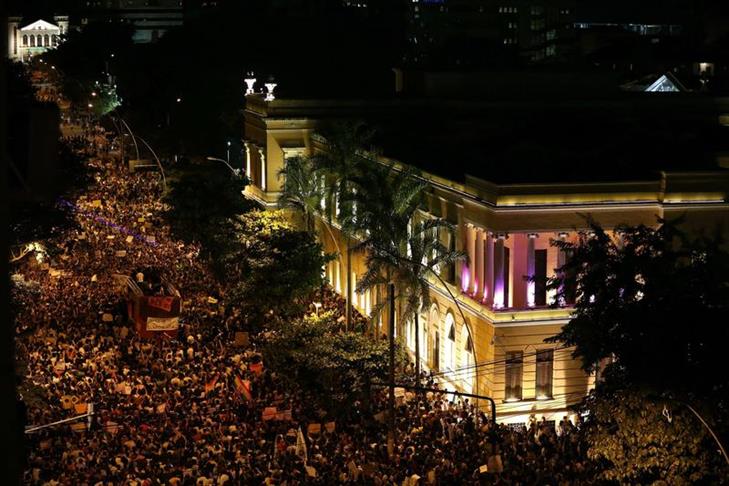
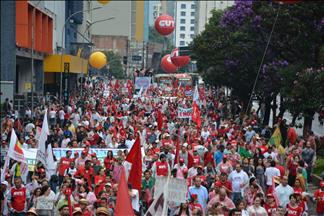
As protesters count the victories won so far, Brazilian President Dilma Rousseff met representatives from 24 youth groups on Friday, in a bid to understand the glut of different agenda behind the wave of protests that has gripped the country for the last three weeks, and open up continuing dialogue with the various protest movements.
The groups, including representatives from Brazil’s Slutwalk movement, were welcomed to the Presidential Palace, and broached topics ranging from police brutality and political corruption, to the decriminalization of abortion and the right of members of the LGBT (lesbian, gay, bisexual, transsexual) community in Brazil.
Later the government announced the creation of a “participatory observatory” – a permanent line of communication with young people through social networks, which is set to be launched on July 8. The project will formalize and continue the government’s public consultation process started in the wake of the protests, and hopes to hear young people’s views on topics such as education, health, transport and security.
Following the talks, a student union representative said the president confirmed her support for investment in education and health through oil royalties. The Chamber of Deputies has recommended that 75 percent of the royalties go to education and the remaining 25 percent – to health.
Have mass protests peaked?
Some commentators in Brazil have said there is growing evidence that the weeks-long wave of mass protests has reached its highest point, with protest crowds now generally totalling hundreds or the low thousands, not hundreds of thousands as was seen in recent weeks.
The biggest protest held in Brazil on Friday was in the northeastern city of Natal, where some 10,000 people took to the streets. The city will host World Cup fixtures next year, but has not staged matches for the Confederations Cup.
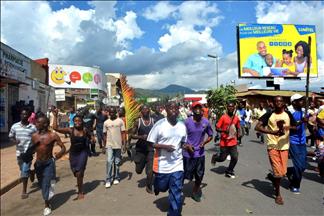
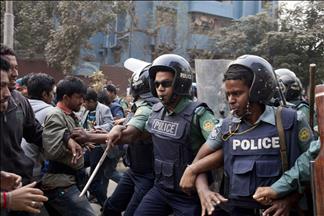
Protests also took place in Vitório, Rio de Janeiro and the São Paulo satellite city of Guarulhos, the location of São Paulo city’s main international airport. Protesters blocked access roads and some sprayed graffiti on buses and vandalized a branch of Santander bank. Police used rubber bullets in an attempt to disperse a group that tried to tear down a fence at the City Hall.
Traffic heading in the direction of Guarulhos, and the international airport, could be seen backed up right to the city centre, and airport shuttle operators urged bus passengers travelling to the airport to leave extra time to reach the airport.
Protests around the country focused on a debate still raging over a proposal to allow adult homosexuals to be “treated” for their sexual orientation, known as the “gay cure” motion.
Protesters also continued to call for the removal of evangelical pastor Marco Feliciano as head of the country’s Human Rights and Minorities Commission, whom they accuse of homophobic, misogynistic and racist comments in the past.
Big protest expected at Confeds Cup climax
But although the number of protesters may have dwindled over all, huge numbers of people are expected to take to the streets of Rio de Janeiro on Sunday, as Brazil takes on Spain in the final of the FIFA Confederations Cup at the Maracanã stadium.
Protesters have targeted the matches specifically, both due to the multi-billion-dollar outlays being spent on preparing the country to host the tournament and the World Cup next year, and because of the international media coverage they inevitably attract. The Maracanã stadium has also been at the centre of protests, after over R$1.2 billion (US$530 million) was spent on its upgrade, which was plagued with delays and corruption allegations.
Initially sparked by an unwelcome increase in bus fares in São Paulo, the protests have since widened into a national movement, calling for better public services and security, political reform and an end to corruption and police violence.
Officially unrelated to the protest movement, over a million people are expected to take part in the São Paulo’s annual March for Jesus on Saturday. Parts of the city will be shut down as the process heads in the direction of a central square. Around 1.2 million attended the event in 2012, according to police figures.