BRUSSELS, MOSCOW
The U.S. and EU are to tighten sanctions against Russia over the country's alleged involvement in eastern Ukraine and the occupation of Crimea.
Agreeing wider sanctions on Wednesday, the EU said it would announce a list of organizations and people targeted by the new sanctions at the end of the month.
In the meantime, investment in Russia through the European Investment Bank and the European Bank for Reconstruction and Development will be suspended as sanctions target individuals and firms providing material or financial support to the destabilization of eastern Ukraine.
The bloc will also consider suspending the implementation of cooperation and bilateral programs, although projects "dealing exclusively with cross-border cooperation and civil society will be maintained," according a statement from EU leaders.
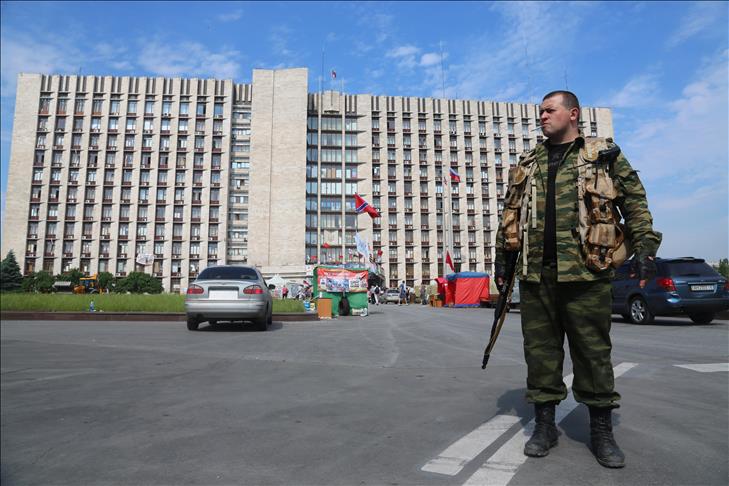
"The European Council condemns the continuation of illegal activities by armed militants in eastern Ukraine, including the occupation of public buildings, hostage-taking and armed attacks on Ukrainian law enforcers and border guards," the declaration said.
Fresh U.S. sanctions announced on Wednesday focus on Russia’s energy, financial services and defense sectors, as well as Russian government officials and the breakaway governments in the provinces of Donetsk and Lugansk.
President Barack Obama said: “These sanctions are significant, but they are also targeted and designed to have the maximum impact on Russia while limiting any spillover effects on American companies, or those of our allies.”
EU leaders warned last month that Russia must agree a number of conditions to avoid further sanctions, which it said had not been met.
Russia says sanctions could damage Europe
Russia has spoken out against fresh U.S. and EU sanctions, warning that European sanctions could “pose challenges” for EU states.
In a statement released on Thursday, the Ministry of Foreign Affairs reiterated a declaration that Russia would not use economic sanctions, adding: “These steps would not only pose challenges for the Russian economy, but for a number of EU member countries which are already weighed down by serious economic problems.”
EU leaders agreed on Wednesday to widen sanctions against Russia over the country's alleged efforts to destabilize eastern Ukraine and its occupation of Crimea. Much of Europe's energy needs are supplied by Russia.
The U.S. has targeted Russian government officials and key figures in the energy, financial services and defense sectors.
In a separate statement aimed at the U.S., the foreign ministry said: “We have mentioned numerous times that using the language of sanctions with Russia will not lead anywhere good.
“However, if Washington intends to damage Russia-U.S. relations, then it is their call.”
The statement said Russia is open to constructive cooperation with all countries but said Moscow considered the additional sanctions as a “primitive attempt at taking revenge for the course of events in Ukraine that did not develop in accordance with the wishes of Washington.”
The three-month conflict in eastern Ukraine began when the Kiev government launched an operation against separatists who declared independence in Lugansk and Donetsk provinces.
www.aa.com.tr/en