Experts slam Mugabe's 'damaging' sanctions threat against US, UK firms
Experts criticized threats by Zimbabwean President Mugabe to impose sanctions on US, British companies operating in Zimbabwe in retaliation against their ongoing sanctions on the country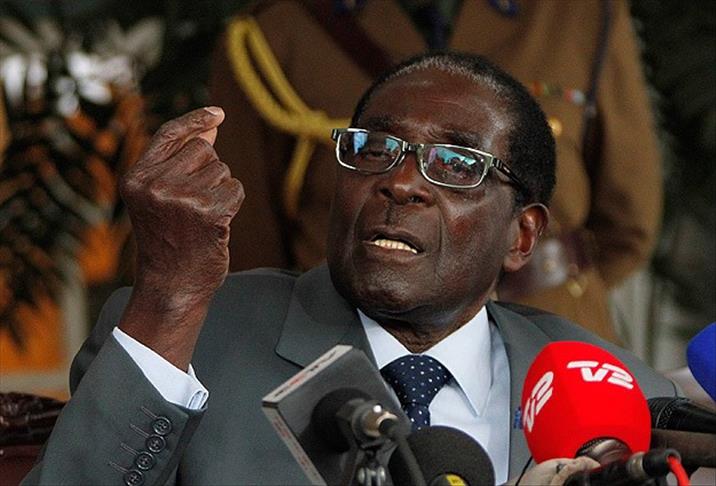
Experts have criticized threats by President Robert Mugabe to impose sanctions on US and British companies operating in Zimbabwe in retaliation against continued US and British sanctions on the country.
"Mugabe is sending the wrong message to people with a keen interest in investment," Dumisani Nkomo, a political analyst, told Anadolu Agency.
"He should be talking about getting the economy working," Nkomo added.
On Sunday, Mugabe threatened to retaliate against US and British firms working in the country.
"They should not continue to harass us, the British and Americans," he told mourners at the funeral of a retired air commodore.
"We have not done anything to their companies here," he added.
"We have not imposed any controls or any sanctions against them. But time will come when we will say, well, tit-for-tat; you hit me, I hit you."
As of the filing of this report, the US and British embassies in Zimbabwe had not responded to AA's questions regarding the number of US and British firms currently operating in the country.
Citing reports of vote rigging, the US and Britain have voiced concerns over Zimbabwe's July 31 elections, which were won by Mugabe and his ruling Zanu-PF Party.
During his inauguration speech on Thursday, Mugabe took a swipe at both countries.
"As for the odd Western countries who happen to hold a different, negative view of our electoral process... we dismiss them as the vile ones whose moral turpitude we must mourn," the president asserted.
Since 2000, when white-owned farms were stormed and claimed by black Zimbabweans, Mugabe and senior party officials have been slapped with sanctions by western countries.
- Bad for investment -
Economist John Robertson, for his part, warned that Mugabe's remarks would scare off potential foreign investors.
"Some companies from the US and UK are making a meaningful contribution to our economy in terms of paying taxes and providing employment," he told AA.
According to Robertson, threatening to sanction US and British firms sends the wrong message to potential investors who might be otherwise willing to channel foreign direct investment into Zimbabwe.
"After hearing such statements, some countries might not want to be near Zimbabwe because it sends a message that some decisions are made out of impulse [rather] than principle," Robertson said.
He added that initial sanctions imposed on Zimbabwe had been due to allegations of human rights abuses by the government. Therefore, Robertson asserted, if Mugabe is to deal with the issue, he should first work to address the country's human rights record instead of unleashing his own sanctions regime.
Nkomo, the political analyst, voiced doubt that Mugabe was serious about levying sanctions on foreign companies, since Zimbabwe's national economy was likely to be the biggest loser.
He suggested Mugabe should behave like a statesman and evaluate what the country stands to benefit from his offensive against the West.