By Halima Athumani
KAMPALA
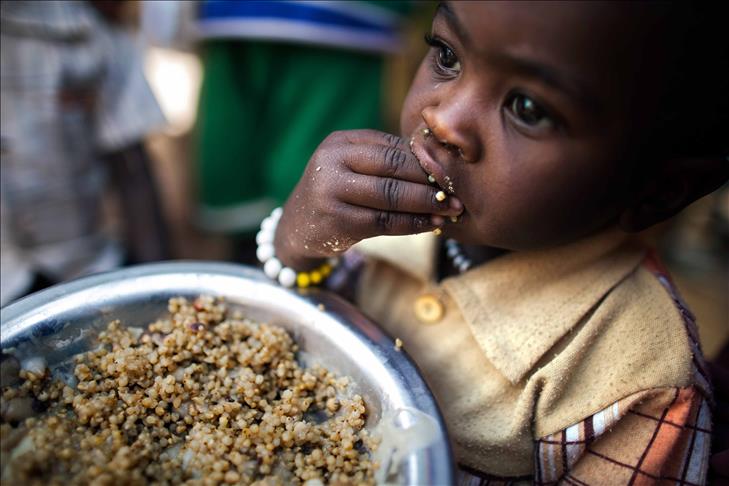
The UN World Food Programme (WFP) said it will effectively start distributing full size food distributions to all refugees in Uganda as of Friday.
The announcement comes after the agency received a $15.4 million contribution from the United States and an additional $2.3 million from Australia.
The WFP office in Uganda, in a statement, hailed the "generous funding" from the two countries, a contribution that comes one month after the agency said it had been "forced" to cut food ratios to almost 150,000 refugees in the East African nation.
"These contributions have come at a critical time, and will allow WFP to support nearly 460,000 people, both Ugandans and refugees, with life-saving assistance for three to four months," the WFP Country Representative Alice Martin-Daihirou said in the statement.
"The U.S. gift will also support extremely food insecure households in Karamoja by helping to fill their food gap between April and July," she added.
However, Martin-Daihirou said, WFP still needs additional funding in order to continue providing full rations to all refugees through the end of the year.
"WFP needs $7.6 million per month to provide basic food and nutrition support to refugees," she appealed.
The agency currently assists 303,000 refugees in Uganda, playing a key role as part of a coordinated effort under the UN High Commission for Refugees (UNHCR).
The influx of people fleeing the conflict in neighbouring South Sudan over the last 14 months has tripled WFP’s funding requirements to meet refugees’ basic food and nutrition needs, and numbers are projected to grow to 383,000 by December 2015.
In January, a lack of funding forced WFP to cut food rations for 146,000 refugees who had arrived in Uganda before July 2013.
The ration cuts, a last-resort measure, did not affect the new South Sudanese refugees arriving in Uganda since the fighting broke out in their country in mid-December 2013.
With the new contributions, WFP will also be able to provide a market opportunity for small-scale farmer groups by supporting local food purchases.
Under a government system, refugees are allocated plots of land to build a shelter and grow food. However, they need external assistance, including WFP food and nutrition support, until they are able to adequately provide for themselves through agriculture and other livelihood activities. This, according to the WFP country representative, can take up to five years.
Since 2014, for all its programs in Uganda, WFP has received support from Australia, the European Commission, France, Ireland, Japan, the Organization of Petroleum Exporting Countries (OPEC), the United Kingdom, the UN’s Central Emergency Response Fund and the United States.