Betül Yürük
15 January 2016•Update: 17 January 2016
By Makarim Wibisono
Following my resignation as Special Rapporteur, I am left with a sense of regret: Regret that I was effectively denied access to the Occupied Palestinian Territory by Israel; regret that Israel failed to take the opportunity to turn over a new leaf by cooperating with this United Nations mandate; but most of all, deep regret that the non-cooperation by Israel with my mandate, as well as other United Nations mandates which it dislikes, signals a continuation of a situation under which Palestinians suffer daily human rights violations under the Israeli occupation.
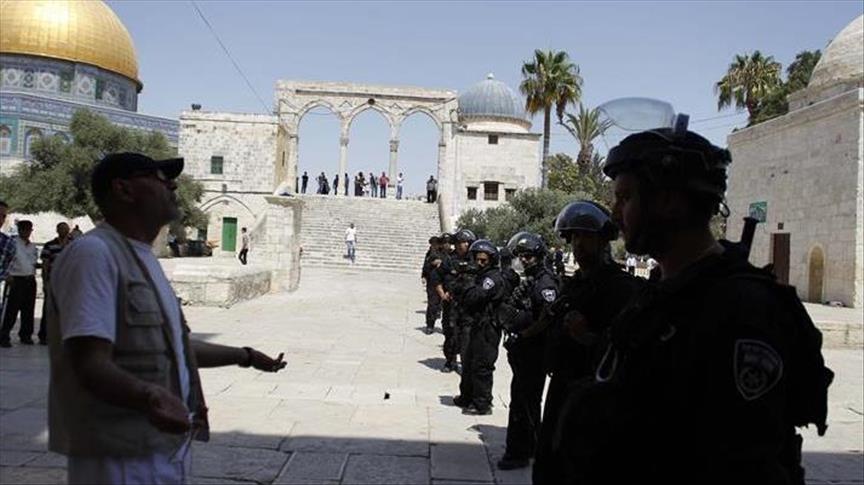
The surge of violence over the past months, especially in the West Bank, including East Jerusalem, illustrates that the situation desperately needs a light to flicker at the end of the tunnel. Palestinians, especially the young generation who were born under occupation and into a situation of conflict, need hope for the future. Israel, as the occupying Power, must realize that peace, for Israelis and Palestinians alike, starts with respect for human rights.
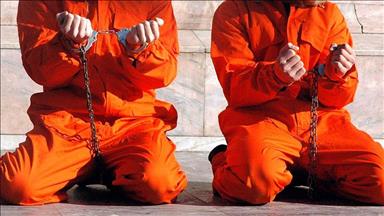
In the year and a half that I have held this mandate, I have met with Palestinian victims and witnesses, heard from UN representatives, Palestinian Government officials, international, Israeli and Palestinian civil society organisations and human rights defenders. I am deeply concerned that the situation continues to worsen. Settlements, administrative detention of Palestinians, the treatment of Palestinians, including children, detained and imprisoned by Israel, the Wall and wider movement restrictions, continuing reports of excessive use of force by Israeli security forces, the longstanding blockade of Gaza and slow progress in reconstruction following the Israel’s military operation in Gaza during hostilities in 2014 with Hamas and other Palestinian armed groups, and the lack of accountability for violations of international human rights law and international humanitarian law, are ongoing causes of serious concern.These are all realities of the situation in the Occupied Palestinian Territory and of Israel’s policies and practices there. The impact on individual Palestinians as well as Palestinian communities and society in general is immense and entails violations spanning civil, political, economic, social and cultural rights.
When the UN Human Rights Council in 2014 appointed me as Special Rapporteur, I was greatly honored, but I did not take the decision to accept the mandate lightly. Had I not at the time been informed that I would be able to conduct in situ visits to meet with Palestinian victims and witnesses face to face and to see the impact of the occupation on the ground with my own eyes, my decision might well have been different. In my diplomatic career I have worked in various capacities to further human rights. With the prospect of direct access and a level of engagement by Israel with my mandate, I believed I could be effective in fulfilling the mandate, and make a positive difference to the lives of Palestinian victims of human rights violations occurring in the context of the nearly half a century old Israeli occupation of Palestine.
Alas, I never received any formal response to my several requests for access sent in 2014 and 2015, and meetings with the Israeli Permanent Representative to the UN in Geneva on the issue proved fruitless.
This is a highly politicized conflict, but at its heart are real lives and a fundamental need for compliance with international law, including respect for human rights. I will be presenting my last report to the Human Rights Council in March 2016. I continue to hope that Israel will change its stance regarding the mandate and will cooperate and stop hindering the access of independent experts. This is important for Israel’s own human rights credibility. Regardless of whether or when this happens, however, it is my sincere hope that whoever is appointed by the Human Rights Council to succeed me as holder of this independent mandate will be a strong voice and can be part of a more effective protection by the international community of the occupied Palestinian people.
Who is Makarim Wibisono?
Born in 1947 in the Indonesian city of Mataram, Makarim Wibisono was appointed by the United Nations as the Human Rights Special Rapporteur for the occupied Palestinian territories. Previously he served as the UN Permanent Representative of Indonesia in Geneva (2004-2007) and in New York (1997-2000). He also worked as Executive Director of the Association of Southeast Asian Nations (ASEAN) Foundation in Jakarta (2011-2014) and Chairperson of the Asia Pacific Economic Cooperation (APEC) Counter Terrorism Task Force (2003-2004). Since 2009, he has been an adviser to the International Human Rights Commission of Jakarta, Indonesia.
Makarim Wibisono resigned from his duty as United Nations Human Rights Special Rapporteur on Jan. 4, 2016 on the grounds that his efforts to help the Palestinian community under Israeli occupation were hindered by Israel, which refused to give him access to the occupied Palestinian territories.
"Opinions expressed in this piece are the author’s own and do not necessarily reflect Anadolu Agency's editorial policy."