KARACHI, Pakistan
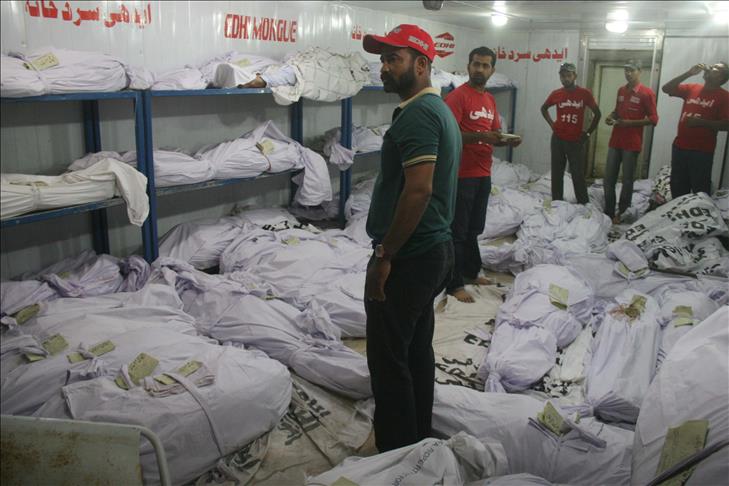
An unprecedented heatwave in Pakistan, compounded by high humidity, power cuts and low water consumption because of Ramadan fasting has killed more than 200 people in the country's commercial capital, Karachi, according to health experts.
The majority of the countrywide deaths of more than 250 over the past three days have been in the port town, where humidity levels have reached 75 percent.
"No doubt, the heatwave is unprecedented but there are various other factors that have led to such a high number of deaths," Dr. Tariq Mehmud, a director of Karachi's Jinnah Postgraduate Medical Hospital, told Anadolu Agency.
"A high ratio of humidity in hot weather is a killer. It makes you sweat more and more. A high water intake is a must to beat the impact of humidity but because of the holy month of Ramadan, a large number of victims did not have the required liquid intake," he said.
Doctors say that many of the patients have fallen unconscious during power cuts that have lasted for as long as 12 hours and can cause water shortages because the water pumps rely on electricity.
Many of the patients were from Karachi's slums, which have been particularly hard hit by the power shortages.
A representative for the provincial Sindh government said 10 medical camps have been set up across the city to deal with people suffering from heat stroke but, according to Karachi-based health expert Dr. Mazhar Khamisani, the heat by itself has not been the only factor for the high death toll, though it has exacerbated the health conditions of the frail and elderly.
He said there are measures that people could take to enhance their bodies ability to cope with the heat, even when fasting, by reducing the amount of sugary and oily foods they consume and ensuring they are hydrated.
"The heatwave is massive but not unbearable. It actually hit the aging people or those whose resistance had weakened due to different diseases and those who did not take precautionary measures," Dr. Khamisani said.
Some environmentalists also see the unplanned urbanization of Pakistan and the resulting rapid deforestation as major factors behind recent extreme weather patterns in the country's south.
Nasir Panhwar, the secretary general of environmental NGO Friends of Indus, said there are man-made factors behind the increasing hot weather in Karachi.
"Since 2010, Pakistan has been in the grip of extreme weather patterns, sometimes in the form of massive floods and rains and sometimes in the form of heat and drought," Panhwar told Anadolu Agency, referring to large floods in 2010 and 2011 that submerged a fifth of the country, and a severe drought in the sprawling Thar desert in the past two years.
"A population influx in Karachi in the recent past has led to a decline in vegetation coverage and elimination of a huge area covered by mangroves, propelling the extreme weather patterns," he said.
"According to international standards, the forest coverage should be at least 25 percent of the total land of a country but in Pakistan, it is between 4 and 5 percent only, which is gradually increasing the frequency of extreme weather."