By Ilgin Karlidag
BRUSSELS
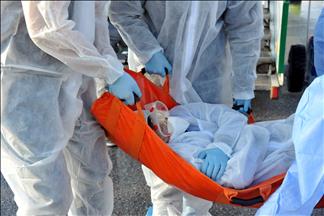
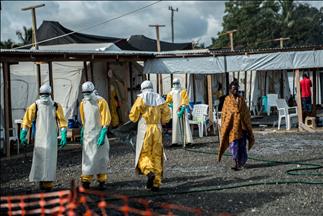
The European Union's Ebola chief has called for more medical help on the ground to fight the deadly Ebola virus, while most of EU’s pledged money has yet to materialize.
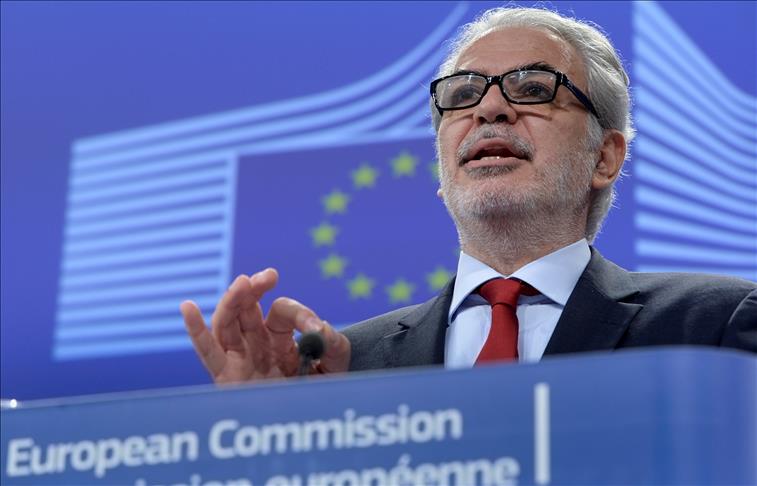
Christos Stylianides told reporters on Tuesday that an urgent medical response to the Ebola epidemic was needed to deal with a "clear and present danger".
Following a visit to the countries worst-affected by the Ebola virus in West Africa, Stylianides said from the European Commission's offices in Brussels: ''My immediate priority is to mobilize our member states so we [can] urgently send on the ground more medical personnel today, not tomorrow - it’s crucial."
However, most of the €1 billion ($1.25 billion) which the EU pledged in late October to give in humanitarian aid has yet to be received by aid agencies working in the countries worst-hit by the Ebola crisis.
Sara Tesorieri, the EU Conflict and Humanitarian Policy Advisor at Oxfam, told The Anadolu Agency: ''Pledges don’t treat patients; we need cash. Pledges won’t help defeat the disease; we need cash.''
- 'Money needed'
According to EDRIS - the EU’s tracking of institutional and member state humanitarian contributions - aid agencies in Liberia, including the World Health Organization WHO, UNICEF and Doctors Without Borders, had so far received roughly €18 million in cash from EU member countries this year.
Aid agencies in Sierra Leone received about €107 million in 2014 and Guinea only got about €5 million, according to EDRIS.
Tesorieri said: ''We need cash to buy soap; we need cash to buy chlorine; we need cash to build training centers; we need cash to run them.
''We need to see that turning into money as quickly as possible.''
EDRIS does not track non-humanitarian aid such as development funding, budget support, or military contributions, but gives an indication as to how much money is actually being spent on fighting Ebola.
The disease has killed at least 4,877 people since the beginning of February this year, with poor countries like Liberia, Sierra Leone and Guinea being mostly hit with more than 1,012 cases being confirmed to date.
- 'Out of control'
The Head of Operations for the International Federation of the Red Cross, Birte Hald, told reporters in Brussels that Ebola was erupting as aid agencies were struggling to keep their staff on the ground.
She said: "It is a massive disease - the spread of Ebola is out of control, and we need massive resources in order to combat this.
"Transmission is not over and it is absolutely premature to start being optimistic."
A UN Special Envoy warned on October 10 that the number of Ebola cases could double every three-to-four weeks without a mass global mobilization.
''When we have the cases doubling every three weeks, we can’t wait six weeks to see money dispersed,'' Tesorieri said.
Vytenis Andriukaitis, the EU Commissioner for Health and Food Safety, told reporters: ''The reasons this epidemic is so dreadful is because of the non-existence of primary health care systems. What is needed now is to boost hygienic practice.
"We need not only doctors, but also thousands of paramedics and health care volunteers. We need not only mobile laboratories but an improvement in water and sanitation supplies.''
www.aa.com.tr/en