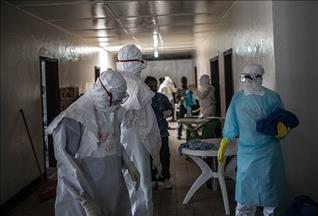
Liberia links school resumption to Ebola containment
Schools had earlier been scheduled to open in September.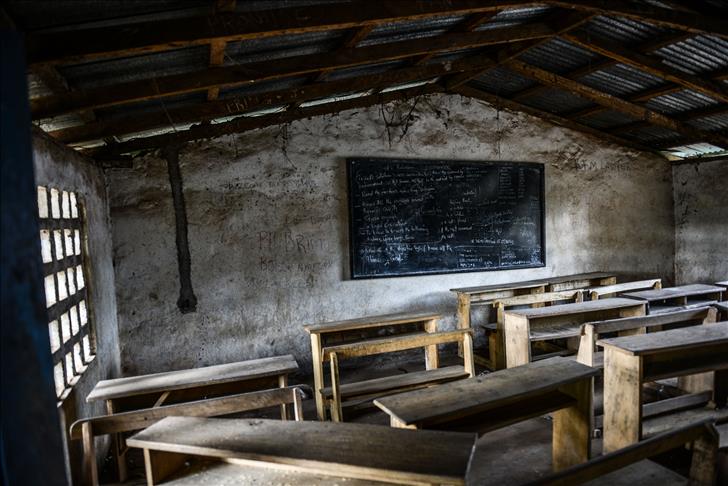
By Evelyn T. Kpadeh
MONROVIA
The fate of the new school year in Liberia remains uncertain amid fears it could aggravate the ongoing Ebola outbreak in the West African country.
"The Ebola situation was not something that was predicted as we had earlier made our school schedule. Therefore, opening in September does not seem realistic," Education Minister Etmonia Tarpeh told Anadolu Agency in an exclusive interview.
Schools had earlier been scheduled to open in September.
But Tarpeh said schools would remain closed until President Ellen Johnson Sirleaf and health experts announce that the virus had been contained.
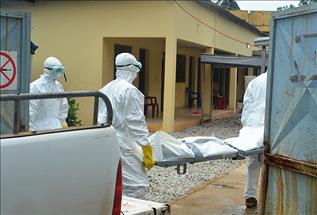
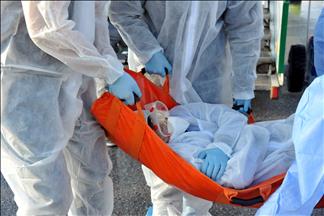
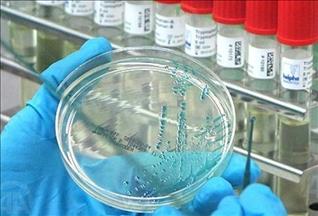
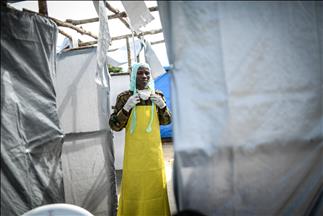
In recent months, Ebola, a contagious disease for which there is no known treatment or cure, has killed at least 2,909 people in West Africa in recent months, including 1,677 in Liberia alone, according to the World Health Organization.
The tropical fever, which first appeared in 1976 in Sudan and the Democratic Republic of Congo, can be transmitted to humans from wild animals.
It also reportedly spreads through contact with the body fluids of infected persons or of those who have died of the disease.
Tarpeh, for her part, believes opening schools first requires precautionary measures to be put in place.
"Opening schools will require a lot of resources, like having thermometers for body temperature testing at all schools, monitoring and supervising the washing of hands, and observing all other guidelines," she said.
The minister said it was easy for adults to know they are not supposed to shake hands – unlike children, who typically want to play with their friends at school, which could lead to infection.
She urged parents to understand that the decision to postpone the school year was not taken because teachers didn't want to be at school or because people didn't want their children in school.
"It's all about the children's safety," Tarpeh asserted. "Just one child, a whole class and school, can be infected by Ebola."
She did not state when exactly schools would open their doors.
-Radio schooling-
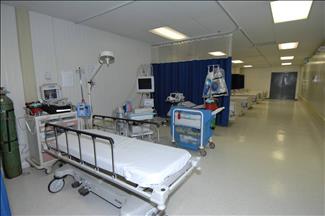
Tarpeh is vehemently opposed to using school buildings as Ebola holding and treatment centers.
This, she warned, would make parents more reluctant to send their kids back to school, fearing the place would be Ebola-infected.
"We are also talking to the public and the entire country that no one should put any suspected Ebola patients in any of the schools," the minister said.
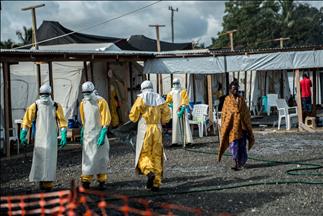
Some observers have recently suggested using school buildings as makeshift Ebola treatment units due to overcrowding at the country's few functioning treatment centers.
Tarpeh said that, because of the current crisis, her ministry planned to launch a radio program in the next few weeks geared towards educating students at home – while she awaits instructions from the president regarding the resumption of class.
The program, she said, would target both parents and students on all the country's radio stations.
"We have professional experts [teachers] from both the private and public sectors that have volunteered to conduct this radio program," Tarpeh told AA.
The program is intended to teach students at home, where they and their parents would be allowed to call in with questions.
Tarpeh acknowledges that the idea may or may not be warmly welcomed, but said her ministry would try it in any case as an alternative while schools remained closed.
Several international partners – including USAID, UNICEF, Plan International and Save the Children – will support the radio program project.
The minister noted that teachers across the country were contributing to Ebola awareness campaigns.
"We are using teachers to carry out the awareness [drives] because there is already a relationship between them [teachers] and parents and students," she said.
The WHO and international health experts warn that combating Ebola in West Africa could take several months, saying as many as 20,000 people could be infected.
englishnews@aa.com.tr